Who owns it
The name on the most recent recorded deed, whether it is a person or a company, whether they live there, and where the tax bill actually gets mailed.
Due diligence for private lenders
Every recorded claim on a property, in the order it was recorded, with the exact rung your loan would land on. Twelve county sources, read while the borrower is still on the phone.
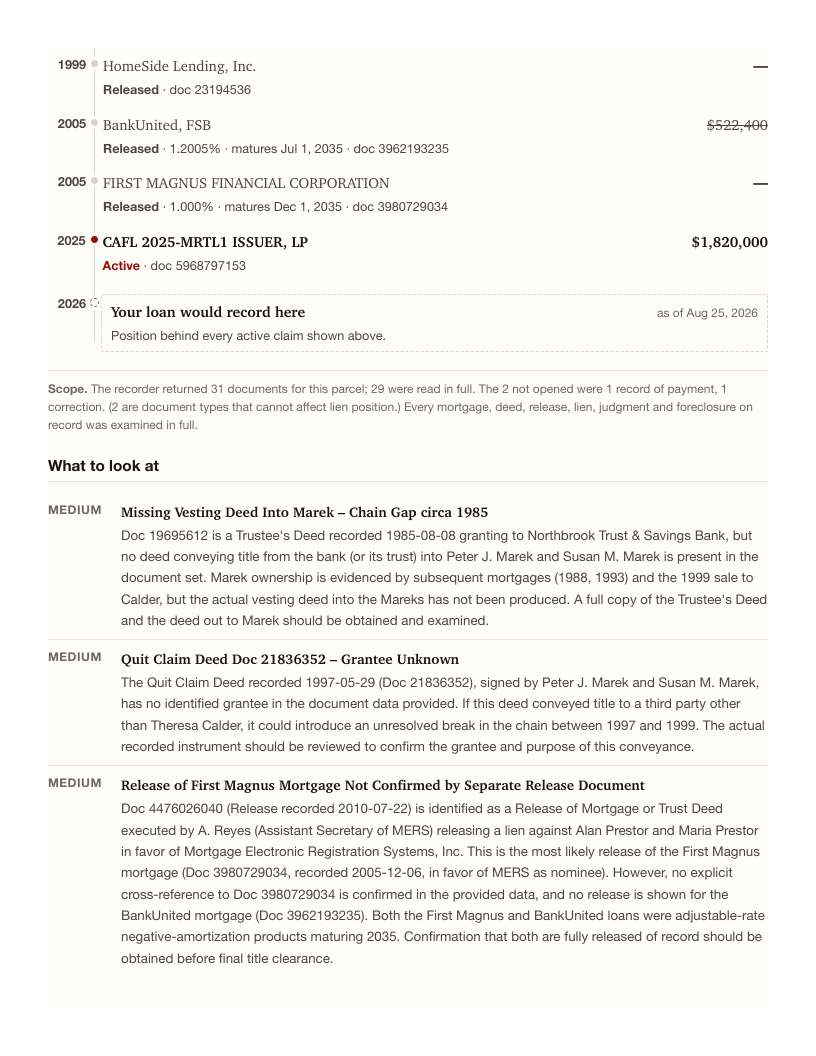
Full recording history, in priority order
1042 Ashdown Ct, Northbrook 31 instruments returned, 29 read in full example only. This address is invented, and so are the names and numbers
One active claim of $1,820,000 is recorded ahead of you, on a house that last sold for $440,000. Seven older mortgages are released and cannot come back.
The part nobody enjoys
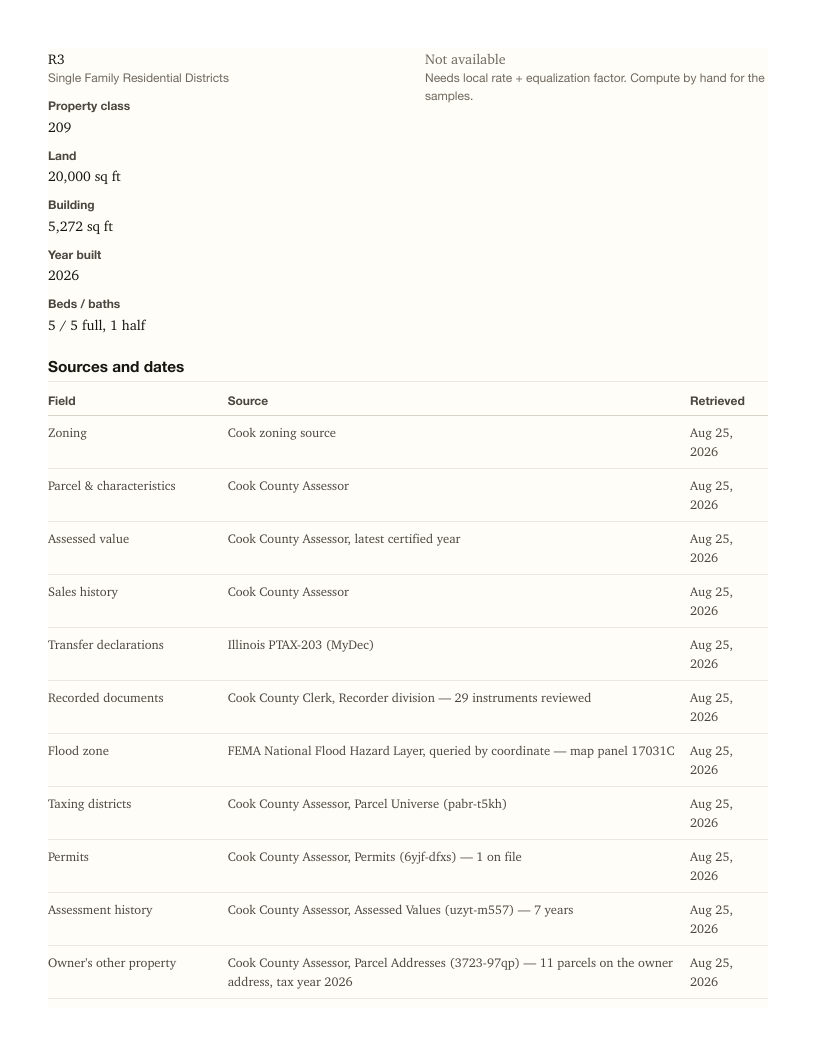
That is what one parcel costs you today. The Clerk for the deeds. The Recorder for every mortgage and every release. The Treasurer twice, because what is billed and what is still owed are two different screens. The Assessor five times. Then MyDec, FEMA, and the zoning layer.
Nobody keeps twelve of those straight at four o’clock on a Friday. That is the whole idea.
What comes back
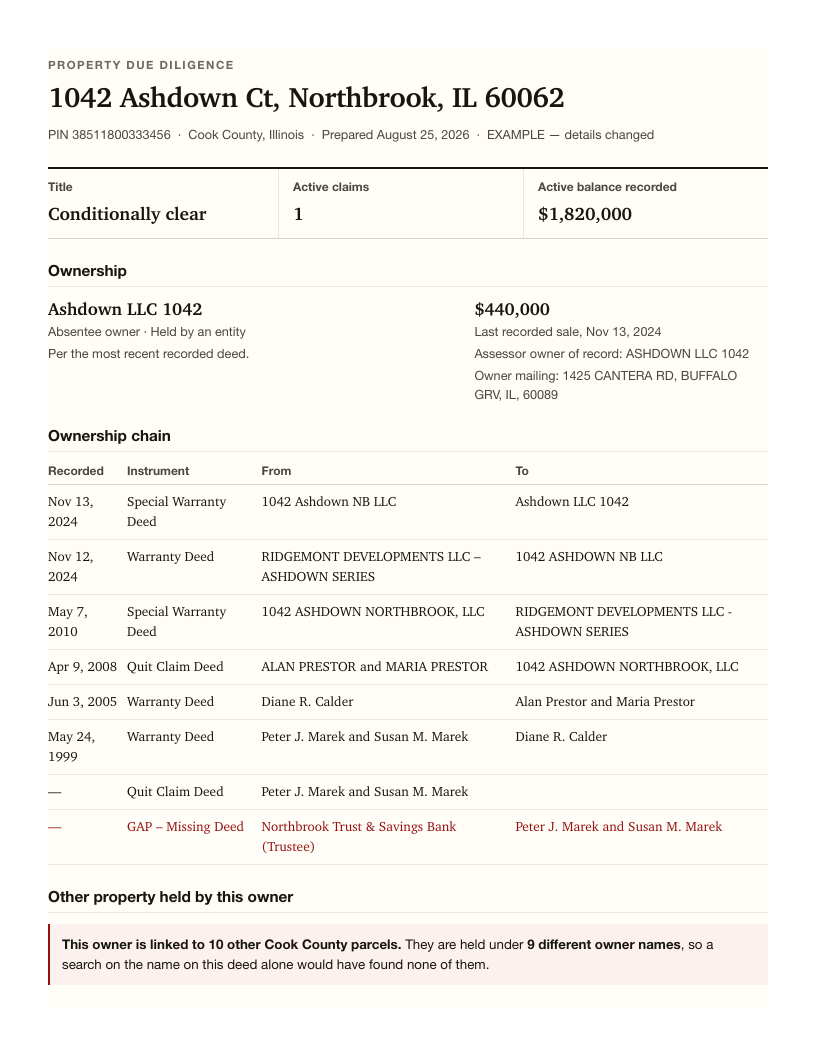
The name on the most recent recorded deed, whether it is a person or a company, whether they live there, and where the tax bill actually gets mailed.
Every deed back through the chain. On the sample parcel that is forty years, back to a 1985 trustee’s deed, with the missing link marked in red.
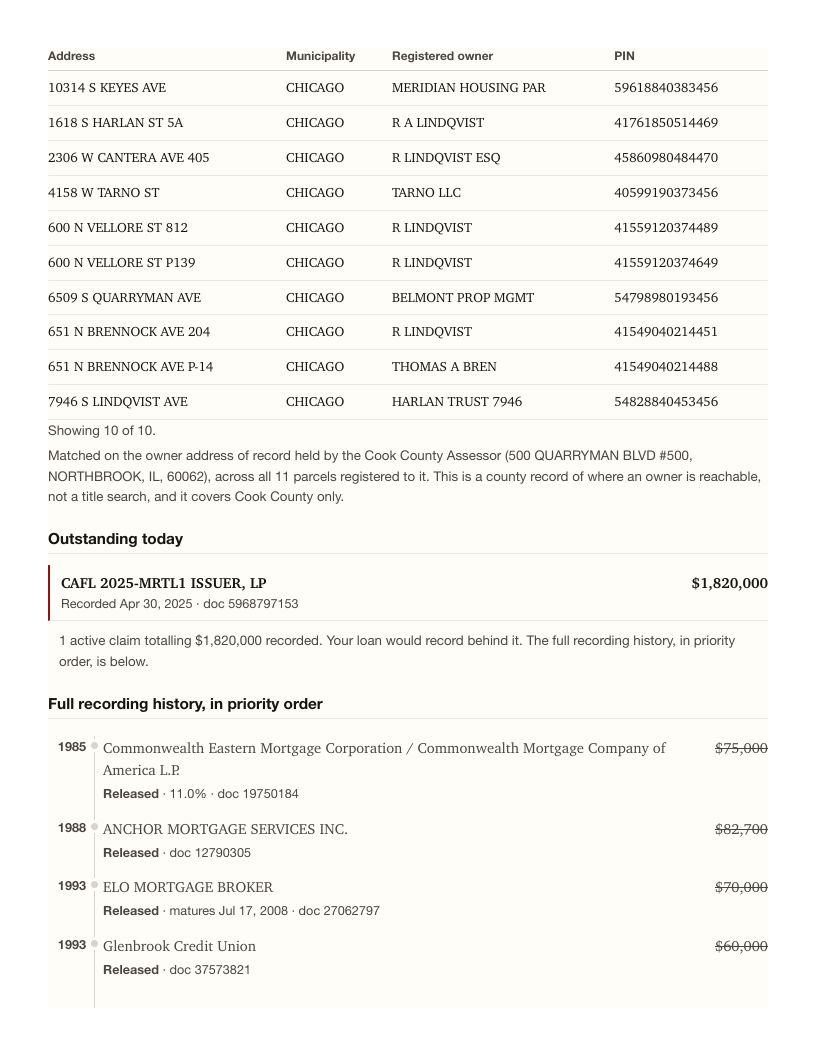
Live mortgages and liens with the recorded balance, the rate where one is recorded, the maturity date, and the document number.
The full recording history in order, released rungs greyed out, and your position marked on it.
Written out in plain sentences. A vesting deed that was never recorded. A quit claim deed with nobody named as the recipient. Two negative-amortization loans whose release was never confirmed.
Every other parcel in the county registered to the same owner, found through the address on the county’s record rather than the name on the deed.
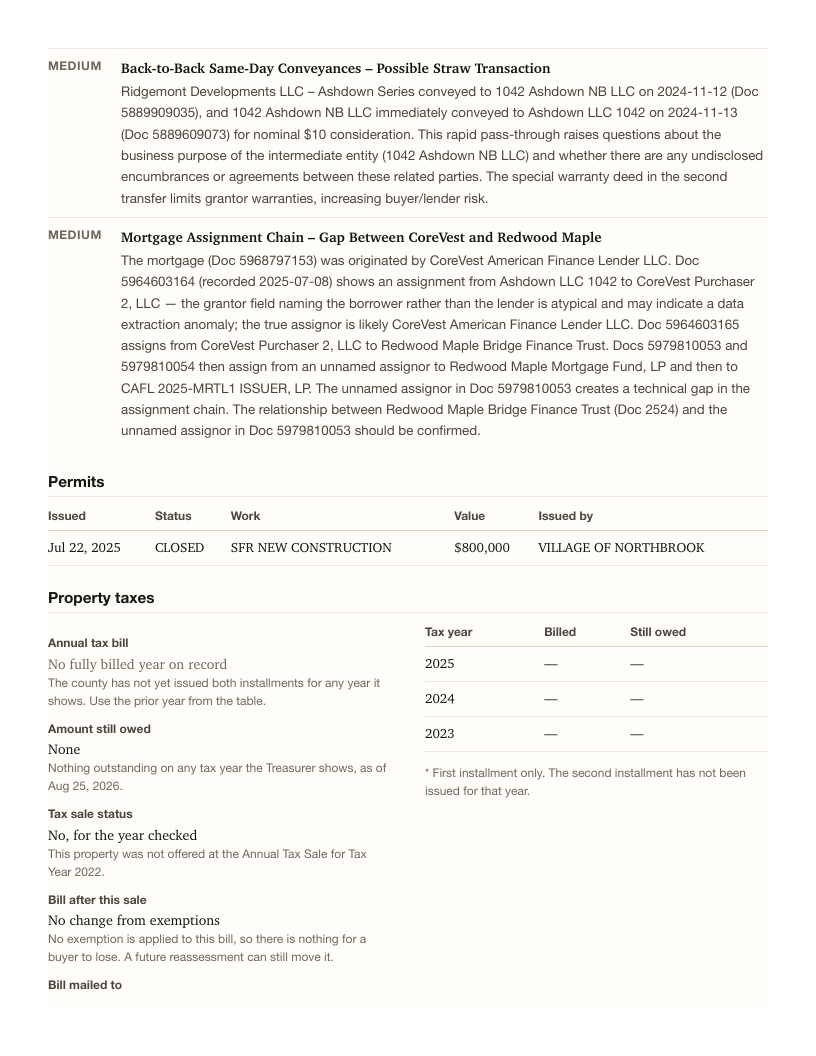
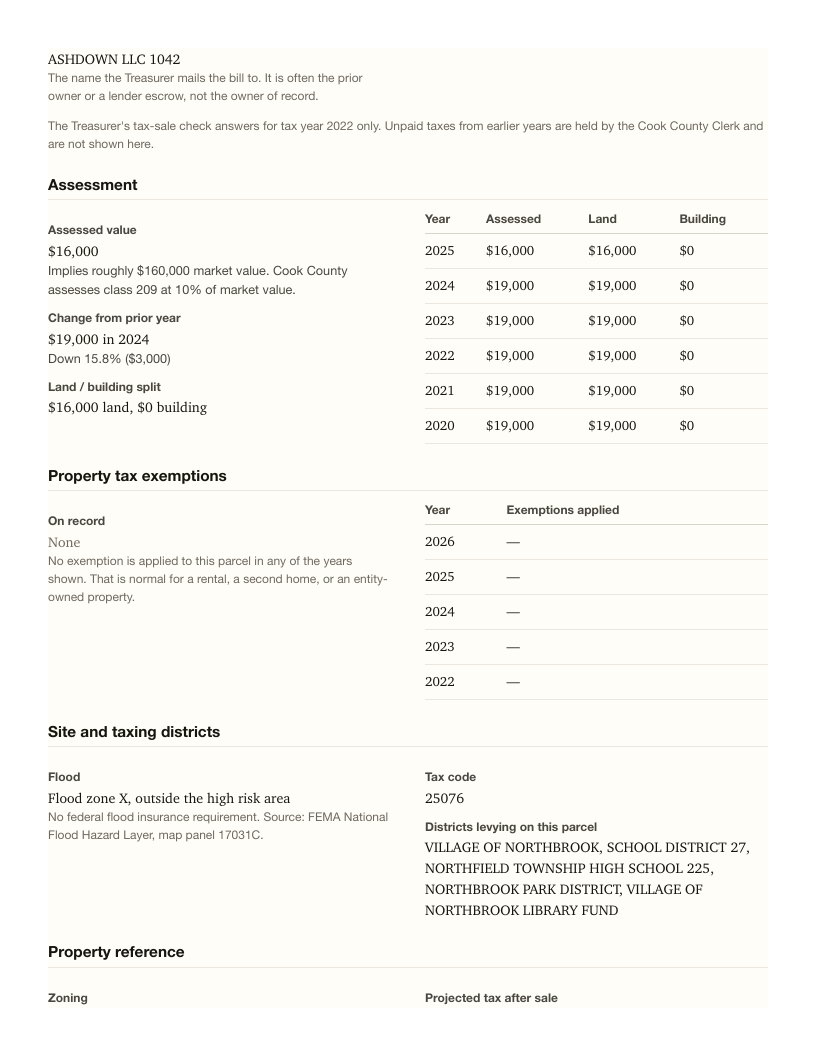
What was billed, what is still owed, and whether it went to the tax sale. Unpaid tax sits ahead of every mortgage. The figures come from the county, never worked out by subtraction.
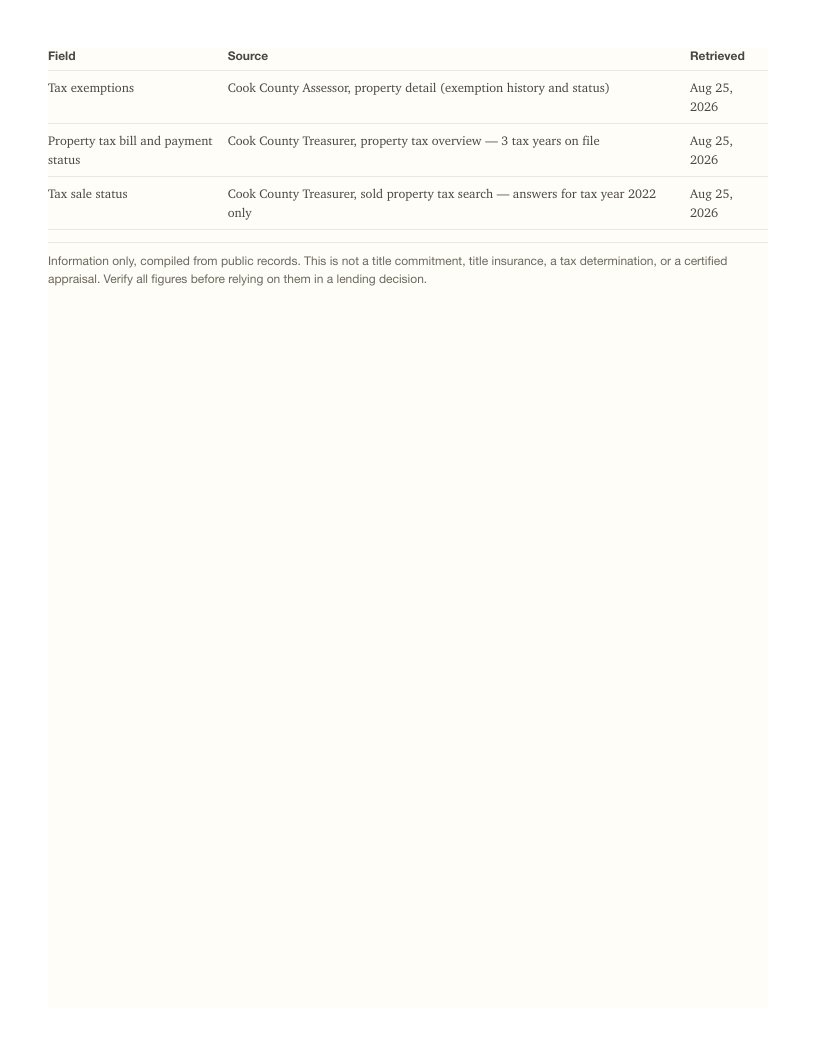
A dated source line for each field, so you can go check the one that matters before you fund.
On the sample parcel that search turned up ten other properties held by the same owner, registered under nine different names. Searching the name on the deed would have found none of them.
The bit that should make you trust it
A blank field says why it is blank. On this parcel the recorder returned 31 documents and 29 were read in full, and the report names the two it skipped and why neither can affect who gets paid first. Nothing is inferred to fill a hole, because a guess you cannot see is worse than an empty box.
No fully billed year on record
The county has not yet issued both installments for any year it shows. Use the prior year from the table.
The sample
Every page of a real report, exactly as it prints. The names, the address and the document numbers are made up, because a sales page is no place for somebody’s private business. The amounts, the dates, the banks and the findings are the real thing. No blurred boxes, no “request a demo”.
Where it works
Need somewhere else? Put the address in the box anyway. You will get a straight yes or no, not a thin report.
Price
$15
One report. Everything in it, every time.
Your first address is free. The whole report, not a sample of one. If it is not useful you have lost nothing but the address.
Running volume? $300 a month covers 30 reports, about $10 each.
It is a third-party cost. It sits on the settlement statement next to the appraisal and the title work, the same as every other line you already pass through.
A preliminary title search in Illinois runs $175 to $225 and takes three to seven days. This is not that, and it is not priced like it.
Read this part twice
Information only, compiled from public records. This is not a title commitment, title insurance, a tax determination, or a certified appraisal. Verify all figures before relying on them in a lending decision.
Nobody rekeys it by hand. The report is assembled straight from the counties’ own records and handed to you as they published it. That is why it comes back in minutes and why it costs $15 instead of $275. If you need a human abstractor to certify a chain of title, buy one. This is the thing you read first to decide whether you need to.